
The Anxious Generation
September 2024
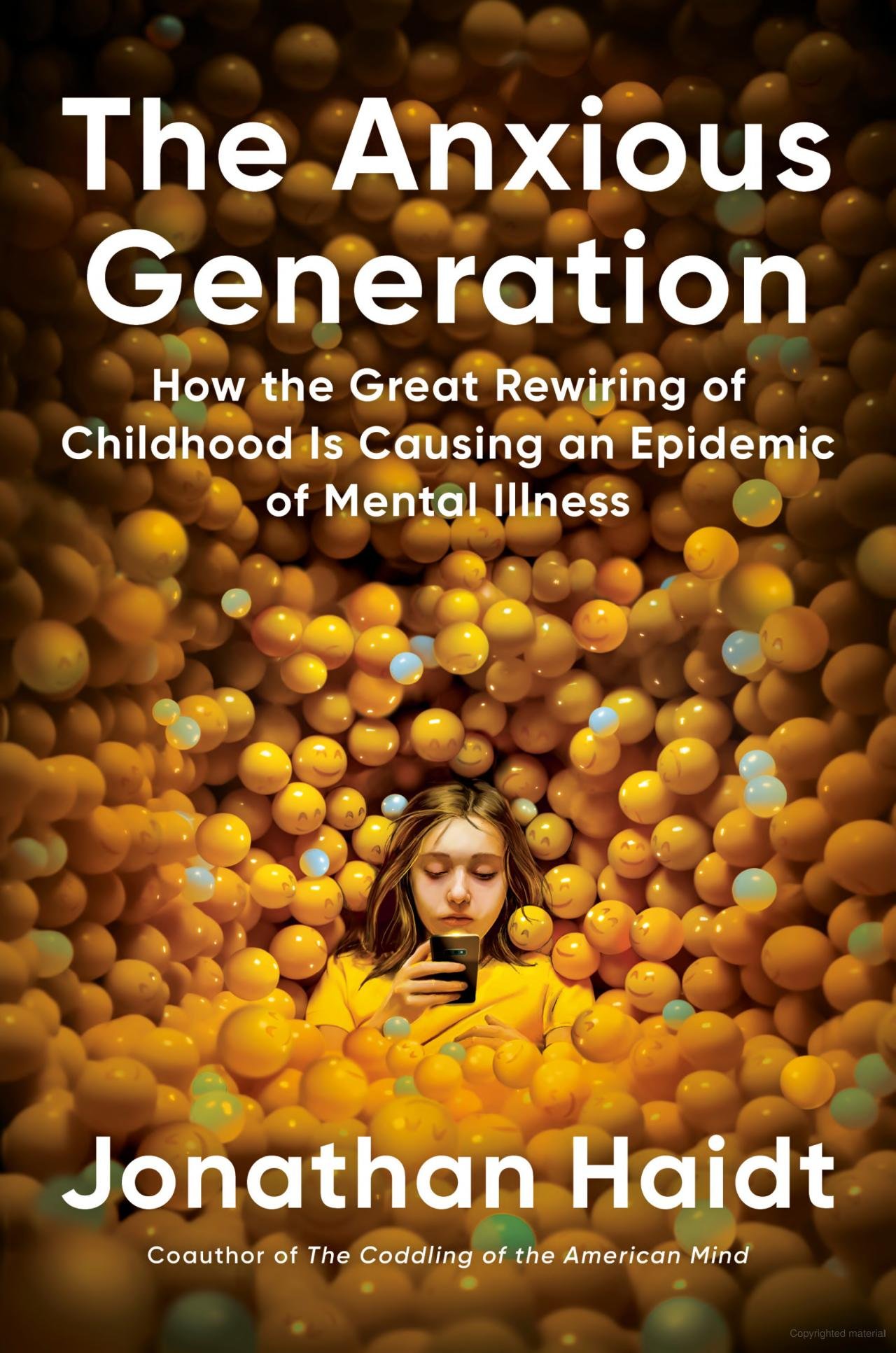
Anxious Gen Discussion Recap:
We as parents are anxious ABOUT "The Anxious Generation", ie Gen Z (kids born between 1998-2012.) There is a tremendous amount of collective anxiety around this topic (i.e. our kids, their devices, the trend of overprotecting them in the real world, and how this whole concoction impacts their childhoods/their mental health and their long term development.) Some group members could not even bring themselves to attend the event because they feel they've "already failed their kids" when it comes to devices/rules/etc. We discussed how very sad this is and how much pressure we put on ourselves as mothers. Throughout the night there was a lot of use of words like failure around this topic - We need to give ourselves grace, we need to give ourselves a freaking break, we are all doing the best we can.
There is no way to go back in time and take devices away. This frankly is not the point of the book at all - but reading the author's "4 social norms" regarding appropriate age recommendations makes people panic when their kids are well beyond the suggested ages for smartphones/social media accounts/etc.
Phone Free Schools movement - one WonderWomen is going to be an ambassador in this movement to get phones out of schools, this is a topic sweeping the nation and NC as we speak. "First Bell to Last Bell" is the goal of the movement. Many schools say they are phone free but this is hard to police, rules vary widely, kids are still on phones between classes/lunch/etc.
100 women turned on on a stormy night to discuss this important book.
Quick book review:
After more than a decade of stability or improvement, the mental health of adolescents plunged in the early 2010s. Rates of depression, anxiety, self-harm, and suicide rose sharply, more than doubling on many measures. The US used to have a play-based childhood, and now we have a “phone-based” childhood that arrived between 2010-2015. This book places smartphones and social media squarely in the crosshairs as the cause of this mental health nightmare.
Haidt lists 4 simple "norms" to help lift us from this collective mental health plunge- 1) wait until high school for smartphones (flip phones, watches, etc are fine), 2) wait until 16 yo for social media/IG/TikTok so that our kids don't go through puberty on social media, 3) a major push to have phone-free schools, and importantly 4) more independence, free-play, and responsibility in the real world.
He makes a strong argument to let kids have more unsupervised time with friends, allow risky play, and support in person time with friends because in-person social time is dwindling. He also encourages the imperative concept of “collective action” where groups of parents band together so kids are not left isolated as the only one without a smartphone. Not to be forgotten are his recommendations for Federal laws including laws that prevent access to porn/inappropriate content for kids.

In the words of Jonathan Haidt, "We are overprotecting our children in the real world and under protecting them online." We need to be giving our kids much more independence at younger ages. And not hovering over them all the time. And not protecting them from small failures, bumps in the road. "Prepare the child for the road, not the road for the child." This is one of the main themes of Haidt's prior book, The Coddling of the American Mind - also an excellent read.
Rules around devices need to be customized depending on the child- are they struggling with body image? Do they have an eating disorder? Are they having trouble focusing? Or are they struggling to manage their time? If so, they need more stringent rules. It is not a "one size fits all" rule around devices.
Haidt calls phones "experience blockers", kids are online an average of 9 hours a day, and 46% report being online "almost constantly." Even if they have no mental health issues, they are losing other experiences, they are losing boredom which leads to creativity.
If you have young kids and don't have devices yet, consider Apple Watches when they reach 11/12 or what feels right for your family (not to mention what you can afford, these things are freaking expensive) - If you can swing it, it may buy you a few years before phones are needed - kids can text and call but there is no internet access. The watches can allow more independence out riding bikes, connecting with friends, etc, but have zero "hook" quality of smartphones.
We need to give ourselves grace (this was repeated throughout the night, I cannot stress this enough), we need to be open and vulnerable with each other when our kids are struggling- it will help everyone to share these hard parts of our lives.
One therapist shared that she believes that mental health spike is related to the changes in the new DSM criteria (changed in 2013) and also the fact that kids now openly talk about their symptoms and that there are many great aspects of social media - keeping kids connected, etc.
A college professor reported that no matter the underlying cause, her college students lack resilience, and their parents are trying to access their daily college grades and coursework. These parents of college kids are simply overly involved in every aspect of their kids' lives. Her students are having panic attacks, vomiting before tests and taking medical leaves of absence due to anxiety. She offered some great advice for parenting. "Don't be a snowplow, be a lighthouse."
Time for kids in person with friends is down 65% since 2010 - so try not to block their friend time. Encourage anything that your kids are doing in person with friends, and this even includes phone calls and FaceTime - anything "live." They need to get into conflict, get into trouble, get into arguments, make games with their own rules, piss each other off, be a jerk to their friends and learn from it, get jerked around and learn from that. I am ad-libbing the convo and Haidt here, but you get the vibe :)
A pediatrician said she thinks that COVID is as much to blame for issues of anxiety and depression, and downfall of grades. She cited the American Academy of Pediatrics "5C's" mnemonic for media usage: "Child, Content, Calm, Crowding Out, and Communication."
Child- Focus on the child and on their specific needs
Content - what sites are they on, is there violence, what are they texting - she advocates reading all of their messages, etc
Calm - Do they have other ways to calm themselves that are not screen-related?
Crowding Out - are screenings "crowding out" other activities like outdoor time, sleep, time with friends, reading books.
Communication - talk about media early and often with your kids of all ages
We as parents need to be a better example with our own phone usage. We need to check ourselves. This is really hard, work is on phones, life is on phones, we chill on phones, etc. But take a look at your own phone usage and make some changes if you want your kids to do the same.
A school nurse said she has seen a rise in stomach aches, headaches, and kids who panic at any sign of hardship. She offered a tree analogy - Kids are like trees. Trees need wind to grow deep roots, otherwise they fall over like the trees in the Biosphere - collapsed before they matured due to no wind while growing. We should not protect our kids from "wind"/hardship/minor setbacks - they need these to learn to thrive in the real world. Kids literally need to face risk, only then do they learn how to not get hurt. "Learning how to navigate risk is the path to adulthood" - Haidt
Broken bones are so down for boys that now teenage boys break less bones than 50 yo men! We don't want broken bones but we do want kids being active in the real world!
There were multiple very open and vulnerable stories of WonderWomen with kids who have eating disorders, anxiety issues, fear of school shooters, mental health problems despite a life without much screens and lots of play time. One mother reminded us all -we certainly don't need to blame ourselves when our children have mental health issues. This is life, life is hard. Not everything is in our control. Shit is simply going to happen and we have to deal. Another said "Remember, your kids are not your report card."
Device usage is hard in situations of divorce where it is much easier for kids to communicate with each parent rather than the biological parents communicating. Different sets of rules are needed. Again, can we give ourselves a break?
Federal legislation is as much to blame as parents for the access our kids have to all kinds of horrible info -beheadings, cats in blenders, porn, there is truly no limit of what kids can witness from the portal in their pockets. We need Federal/state legislation that requires tech companies to enforce age verification/limited access to this crap certainly before age 13, and other rules/restrictions to help keep young kids off porn and other extreme sites - they can currently access these at the drop of a hat simply by lying about their age. A Swedish study found 25% of 12th grader boys were "daily porn users" and studies show avid porn watching leads to less sexual satisfaction and is associated with lower interpersonal satisfaction. Haidt says "immersing boys in an infinite playlist of hardcore porn videos during the sensitive period in which the sexual centers of their brains are being rewired is maybe not so good for their sexual and romantic development, or for their future partners."
Finally, we all need to remember that we are doing our absolute best as parents, our children are resilient, we are resilient, we are all one big work in progress. I love this Dan Gilbert quote: “Human beings are works in progress who mistakenly think they are finished.”
I enjoyed this recent NYTimes article: "Parents Should Ignore Their Children More Often"