
The Emotionally Exhausted Woman
October 2022
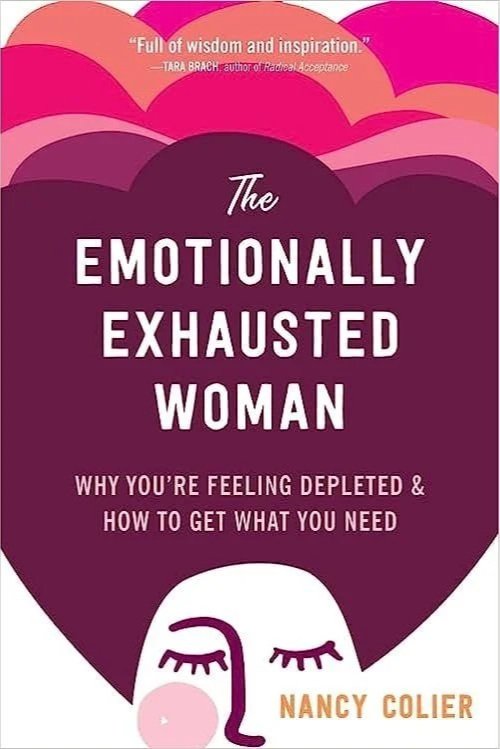
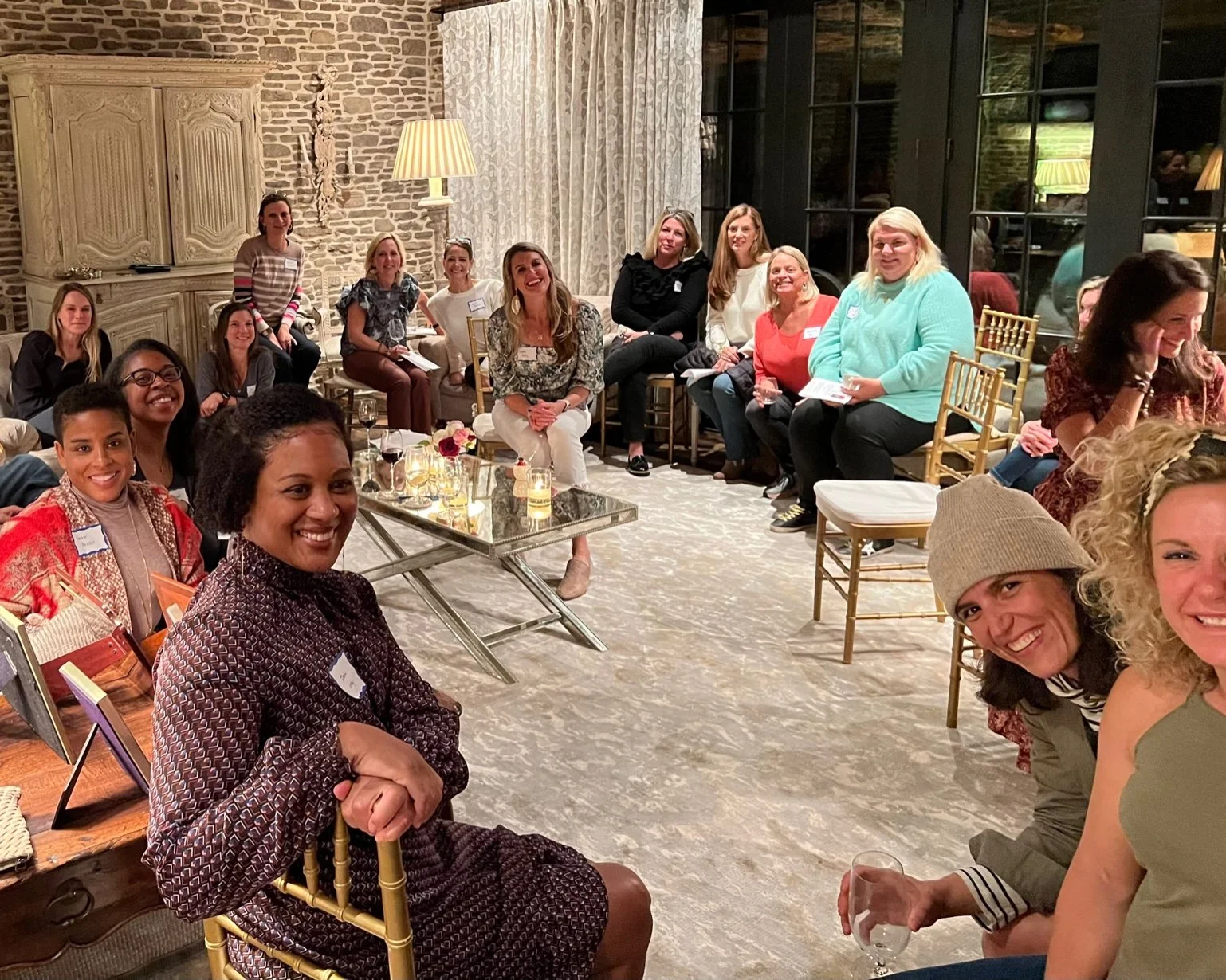
“The Emotionally Exhausted Woman” discussion night
Our group had a fantastic evening as we gathered for dinner and in small groups discussed Nancy Colier’s new book, The Emotionally Exhausted Woman. It is impossible to adequately summarize the evening but below is a recap of topics discussed….
Our reflections that evening…..
The “perfect woman” according to society’s expectations is effortless, ever-available, compliant, helpful, selfless, a master people-pleaser, a “behind the scenes problem-solving ninja who needs no credit”, adventurous yet meek, entertaining, sexy, skinny, a 1950s housewife. (this sounds ridiculously exhausting)
According to society/the soup we were raised in - we are NOT to be demanding, a nag, “a lot”, too competitive, controlling, opinionated, angry, crazy, whiny, needy. “Being needy makes us weak.”
We have trouble saying “no” and leaving it at that - we need to move to a place where don’t feel we have to explain our “no”
It’s refreshing to hear when a woman says “that wasn’t right for our family” and leaves it at that. No need to over-explain every decision.
Mary Beth Terry mentioned her group's great tennis analogy for a decision/discussion (i.e. say something and then move on, don’t keep thinking about it/worry about it/let it bother you) - if you lob a ball across the net, it is out of your court and no longer your problem. Unless the ball gets lobbed back at you, let it stay in someone else’s court. Don’t worry about it unless it gets hit back to you!

Fire pit discussion small group!
Rains mentioned a Quaker concept of something called a “Clearness Committee” - it is a group of close friends who get together with the intention of helping a member of the group with a decision/dilemma. It is far from a normal conversation - the group asks open-ended, non-leading questions with the goal not of providing advice but instead of guiding the person to answers they themselves already have within them but are struggling to find. Look it up - sounds very cool.
We need to find our voice in times of calm - instead of this only happening in times of crisis or trauma. Women sure are great in crisis or trauma.
Most of us do not get much quiet. Quiet time alone with ourselves is so important.
Many of these “perfect” and “imperfect woman” descriptions are self-inflicted. Many reported their partners do not feel this way and instead these feelings/expectations are ingrained in us by society/our upbringing. Much of the time we set these expectations for ourselves!
We are caught in a place of needing help and being exhausted when we do everything and yet simultaneously wanting to "be everything for our family" - a Catch 22. Do you really need to do it all? Is there room to delegate so you don't lose your marbles?
It is not ok to put ourselves first
Consider this - it is really none of your business what other people think of you. Stop worrying about it.
As we are aging, we are less and less concerned with what others think. We are less inclined to come off as "likeable" as compared to our younger selves.
We need to speak our truth and have “compassionate candor” for the other person, but stick to our truth.
We can hear 29 positive things about us/our patient care/our job performance/or from our family members and 1 negative thing, and yet we persevere on the negative. We need to really absorb all the positives!
We need to own our wants. First action is becoming aware of them. Over the next few weeks, ask yourself if you are doing things because you think you “should” or because you really want to! We need to live more in “want.”
Partners often ask wives, “How can I help you?” which implies the job of child-rearing lies squarely on the mother’s shoulders.
The mental load of life is held by women. Research has proven this time after time - whether she works full time or stays at home, she carries the emotional toll, the matrix of the schedule, the worry about all generations of the family, and remains the multi-tasking magician "being everything to everyone".This takes a toll and we absolutely must practice some of the "self-caring" ideas the author describes -
Move from “Should” to “Want”
Tell the truth - without apologizing or bending and twisting, let the other person have their own experience and stop worrying about what they may feel regarding our truth
We need to welcome the whole “catastrophe of ourselves” God I love that expression! Do not pick and choose the parts of you that are welcome. We are who we are and need to love and accept all of ourselves!